

The main goal of studying abroad is to create new career opportunities. This is why international students prefer to study at a reputable university, gain qualifications that are recognised globally, and have a better chance of securing a higher-paying role. Among the many developed countries that offer these opportunities, Germany stands out.
In partnership with Expert Education & Visa Services, ELA connects students with professional guidance on the requirements for international students to study in Germany. Expert Education & Visa Services provides detailed information on universities, courses, scholarships, and the Admission Process. Students are encouraged to contact Expert Education & Visa Services directly for personalised assistance.
Universities and Courses Available
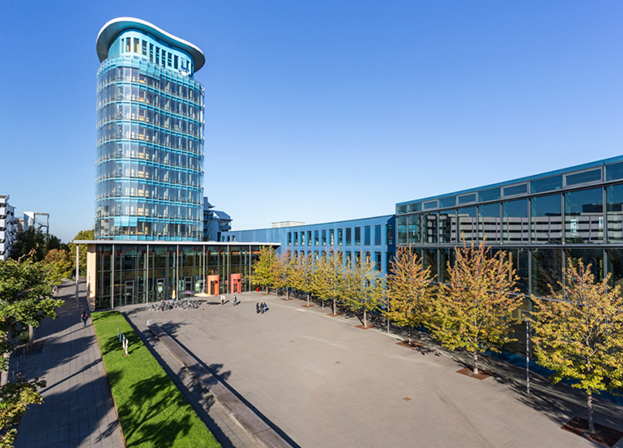
Germany is home to around 20,000 courses across more than 400 state-recognised higher education institutions. When you choose to study in Germany, you have the opportunity to select between private and state institutions for higher education.
Different types of universities in Germany include schools of art, film, and music, as well as universities of applied sciences. International students can study for a bachelor’s or master’s degree, spend a semester abroad, complete their first degree, pursue a doctorate, or study for a Diploma or Magister Artium.
Germany’s education system is slightly different compared to other countries. Let’s explore the differences in each degree.
- Bachelor’s Degree – The bachelor’s degree is part of undergraduate university studies. An academic degree is not required to begin a bachelor’s degree. This programme typically takes three to four years to complete, during which the fundamentals of a subject are taught. A degree is awarded upon successful completion. A Bachelor of Science (B.Sc.) is awarded in science subjects, while a Bachelor of Arts is awarded in humanities. A bachelor’s degree allows entry into the job market at an entry level, with the option to continue to a master’s degree.
- Master’s Degree – A master’s degree is a postgraduate qualification. This programme typically takes one to two years and involves advanced study and specialisation in one or two fields of interest. A degree is awarded upon completion. For example, a Master of Science (M.Sc.) is awarded after studying science subjects, and a Master of Engineering (M.Eng.) is awarded in engineering.
- State Examinations – Certain professions, such as law, medicine, or pharmacy, require students to take official state examinations. These are separate from bachelor’s or master’s degrees. Students must complete professional training before taking the second state examination. Upon passing, they receive the relevant professional qualification and can practise in that field. State examinations follow federal regulations across Germany.
The state exams have certain federal regulations that must be followed regardless of where the student studies in Germany.
- Doctorate – After obtaining a master’s degree, students may pursue a doctorate (PhD). This programme typically takes two or more years to research, write, and publish a dissertation. Students must first find a professor willing to supervise their research before applying to a PhD programme at a university.
- Dual Vocational Degree – A dual vocational degree is a programme that combines higher education with on-the-job training in a company. These programmes are common in business and engineering fields. Students receive paid practical training while studying. The programme typically lasts three to five years, including at least two years of vocational training. Students must first apply to a company that will provide practical training before enrolling in a university programme in partnership with that company.
The dual vocational degree programme covers a minimum of two years for vocational training to give enough time for academic studies. Overall, the programme lasts between three to five years, and this degree programme only permits students to enrol based on their entrance qualifications for German universities. Firstly, the student has to apply to a company that is willing to take responsibility for practical training. Thereafter, the student can enrol for a degree course at the university in cooperation with the company.
Some of the courses offered extensively at German Higher Education Institutions:
- Natural Sciences and Mathematics
- Medical Studies and Specialist Training
- Agriculture, Ecology, Forestry, Veterinary Medicine, Nutritional Sciences
- Humanities, Linguistics, and Cultural Studies
- Law, Economics and Social Sciences
- Engineering
- Art and Music
Some of the popular and reputed universities in Germany include:
- University of Munich
- Ruprecht Karls University Heidelberg
- Humboldt University of Berlin
- Technical University of Munich
- Free University of Berlin
- University of Bonn
- University of Hamburg
- University of Gottingen
- University of Freiburg
- Eberhard Karls University of Tubingen
Fee, Scholarship, Cost of Living

Cost of Tuition
Regarding tuition fees, as a rule in Germany, students do not have to pay fees for bachelor’s or master’s degree courses if they study at a state higher education institution. However, in some German states, students may be charged a specific fee for a second-degree course or if the study programme is not completed within the specified period.
There are exceptions to this. For instance, the state of Baden-Württemberg introduced tuition fees of 1,500 euros per semester for non-EU citizens in the winter semester of 2017/18. This fee applies to students pursuing a bachelor’s, master’s, diploma, or state examination from that period onwards. Students who enrolled before this were not charged. This fee does not apply to doctoral students.
In some cases, master’s and online degree programmes have higher tuition fees of more than 10,000 euros per semester. Generally, private higher education institutions charge higher tuition fees. Private universities charge tuition fees ranging from €7,000 up to €36,500 per academic year, depending on the programme and the university selected. However, it is important to note that higher costs do not necessarily reflect the quality of education provided. Degree programmes with lower or no fees can also offer high-quality education
In Germany, students are required to pay a semester contribution, which covers student support services and the AStA (Students’ Representative Body). The semester contribution fee varies depending on the institution, typically between 100 and 350 euros. This contribution may include a semester ticket (travel pass), allowing students to use public transport in the area. These tickets typically cost between 25 and 200 euros, depending on the coverage. However, not all institutions include the semester ticket in the contribution fee.
Health Insurance Costs
If health insurance from a foreign country is not valid in Germany, international students must apply for insurance locally. Public health insurance in Germany costs approximately 110 euros per month for individuals under 30 years of age. This may also apply to those who have not exceeded 14 semesters of study, after which the cost may increase to approximately 166 euros per month.
Scholarship Programmes for International Students in Germany
In Germany, it is generally difficult to obtain funding directly from institutions, as selection criteria can be highly competitive. However, there are various funding opportunities available. For example, the DAAD offers scholarship programmes for undergraduate, postgraduate, and research students. Political, business-linked foundations, and religious organisations also provide funding opportunities.
Students may receive funding for up to 12 months at each academic stage (bachelor’s, master’s, and doctorate), particularly through programmes such as Erasmus+. This applies to students from participating countries, including EU member states and countries such as Iceland, Turkey, North Macedonia, Norway, and Liechtenstein.
This programme supports study-abroad students and those seeking internships in Germany. Study placements typically last from three months to one year. Students may receive a monthly grant, determined by their home university based on European Commission guidelines. Erasmus+ students are also exempt from paying tuition fees at participating higher education institutions.
Living Expenses in Germany
For international students, accommodation is one of the main expenses and varies by location. Costs may range from 290 to 560 euros per month and can reach up to 867 euros in cities such as Munich, Hamburg, Frankfurt, Cologne, and Düsseldorf.
Accommodation options include student halls, shared flats, or private apartments. Renting an apartment individually can be more expensive and may require a deposit, which can amount to several hundred euros.
To reduce expenses, students may consider using bicycles for transport, dining at university canteens, and choosing shared accommodation.
Admission Process

Germany offers a fairly straightforward admissions process based on whether the international student is an EU or non-EU citizen.
If the international student is from a non-EU country
While applying for admission, you must check whether your type of university entrance qualification is recognised in Germany. The DAAD admissions database can help you find out by entering the country in which you graduated from school. Going through this database can assist you in finding out whether your degree is:
- Enough or not for subject-specific university entrance
- Enough or not for direct general university entrance
- Enough or not, with one or two successfully completed years of study in the home country
If you need a more comprehensive look at the sufficiency of foreign educational qualifications, use the Anabin Database. This database allows you to search results by your country and degree to give you all the information you need on the sufficiency of your degree, and whether you qualify for other requirements.
Since the Anabin Database is only available in Germany, you might not be able to access it. In that case, reach out to our partner, Expert Education, who can help provide the right information for your requirements to study in Germany.
The university you apply to will have the final say about your admission. So, it’s crucial to know the requirements specific to that university. Visit their website and find out more about the conditions and eligibility for you to successfully gain admission.
What happens if your school leaving certificate is not enough to get you admitted into a German university? In that case, you will have to take up a preparatory college, which entails an entrance exam. You must have a good knowledge of the German language to take this exam. Once you have completed the preparatory college, you will undergo an assessment test in subjects relevant to your field of interest. Part of this assessment test also involves a language test.
Foreign students can also take an aptitude test or TestAS, which has a mixture of language tests, cognitive skills tests, and technical questions. This test can help you assess your chances of studying at a university in Germany.
If the international student is from an EU country
If you are from a European country, including Switzerland, Norway, Iceland, and Liechtenstein, the conditions are slightly different. Given that your certificate permits you, you are likely to gain entry into a university in Germany. If you have completed your Abitur at one of the German schools abroad, you get the status of an education resident. This gives you an equal chance when it comes to university entrance qualifications.
University Admission Requirements
A school leaving certificate proves that you have studied at the university of your home country. This secondary qualification, including the high school diploma, Matura, A-Levels, and Bachillerato, is evaluated by the relevant authority.
Students from European countries do not need a visa or residence permit to study in Germany. However, if the EU-based student is going to live in Germany for more than three months, they will have to register with the student registration office in their university town.
The student must also prove that they are able to finance their studies and that they have health insurance. This also applies to nationals of EEA states such as Norway, Iceland, and Liechtenstein.
Documents Required to Study in Germany
While submitting documentation for applying to study in Germany, you must provide officially certified copies of German translations. Some universities also accept English and French documents. You can obtain certification at German diplomatic missions in your home country if needed.
Submissions required from your end during application include:
- Your passport photo
- Copy of your passport showing your name and photo
- Certified copies of language certificates
- A copy of your university and college entrance qualification (officially certified)
- An officially translated and certified transcript of your classes and grades
- Officially certified copies of all previous university certificates (if available)
Life in Germany

Germany offers a safe environment to its citizens, including those who visit for the purposes of studying and working. Around 10.6 million people from outside Germany live in the country. This land of poets and thinkers is also a land of freedom. Those who live in Germany have the right to freedom of belief, expression, and equality, regardless of gender, sexual orientation, religion, and origin.
The country is known for its research and innovation, but also for its remarkable places. For instance, international students can visit the Checkpoint Charlie Museum, which symbolises the Cold War, as well as the City West District’s Charlottenburg Palace and Park, the 18th-century Gendarmenmarkt, Berlin’s Jewish Museum, and the German Museum of Technology, located on the grounds of the former Anhalter train yard.
Germany offers so much more than a simple study and work experience. It is an adventure you do not want to miss.