

Home to some of the most polite people on the planet, Canada is a country you do not want to rule out. This Great White North is a place where education becomes the bedrock of brighter prospects and great minds.
For decades, international students have chosen Canada for higher education. The high-quality education offered here is exceptional, with experiential learning. Several international students have shared that while studying in Canada, they have become more confident. The lifestyle and standard of living enable students to work towards self-growth and self-sufficiency.
Canada is home to some of the top universities and research institutions recognised globally. The educational system applies an intelligent combination of cross-disciplinary studies, transferable teaching skills, and world-class facilities.
Through its partnership with Expert Education & Visa Services, ELA facilitates students’ access to professional guidance on student visa applications and study pathways in Canada.
Universities and Courses Available

If you are interested in studying in Canada as an international student, you will need to obtain a Canadian study permit. It is a document issued by the Government of Canada for international students. In addition, you will need to apply for a student visa. Through our partnership with Expert Education, students can receive support with these processes.
The education system is divided into three levels:
- Primary Education: This level starts from age 6 to 7 until the student reaches age 13 to 14 (up to Grade 8).
- Secondary Education: This level runs from Grade 9 to Grade 12.
- Post-secondary Education: At this level, students can choose their preferred university and course.
Canada has internationally recognised universities offering various courses, with durations depending on the selected programme.
Here is a shortlist of the Canadian universities:
- University Canada West
- Cape Breton University
- Thompson Rivers University
- Nippising University
- Crandall University
- Acadia University
- Mount Allison University
- St Mary’s University
- Yorkville University
- University of Toronto
- University of British Columbia
- University of New Brunswick
- University of Alberta
You can choose from a range of courses, including:
- Biosciences, Medicine and Healthcare
- Media and Journalism
- Agricultural Science and Forestry
- Mathematics, Statistics, Actuarial Science & Analytics
- Psychology & Human Resources
Some popular bachelor’s degree programmes include:
- Bachelors of Business Administration
- Bachelors in Environmental Sciences
- Bachelors of Computer Science
- Bachelors of Engineering
- Bachelors in Film, Photography & Media
Popular master’s degree options include:
- Masters in Computer Science
- Masters in Civil Engineering
- Masters in Public Health
- Masters in Finance
- Masters in Human Resource Management
We can support you with everything you need to know about studying in Canada, including available courses and universities. Connect with us today.
Fee, Scholarship, Cost of Living

The average cost of studies and living expenses is lower than in other top study destinations.
The Canadian Teaching Style Is Worth The Pay
- A vast majority of programmes cost over C$10,000+ per year, while a few programmes cost around C$1,000 to C$4,000+ per year.
- Generally, you will need between C$20,000 and C$30,000+ annually to cover your tuition fees.
- For undergraduate programmes, you will need around C$20,875+ per year.
- Dentistry can cost you C$56,621+ per year.
Some of the common experiences a student studying in Canada can enjoy include open and friendly communication. As lectures are integrated with engaging and innovative methods to improve creative and analytical thinking, students can clarify complex doubts without hesitation.
Universities with multiple study fields include career-focused programmes. The curriculum is updated with current trends and events that support meeting today’s job market expectations.
Studying in Canada becomes worthwhile due to its fee structure and well-thought approach to providing quality education.
Scholarship to Study in Canada
We will provide you with a list of guidelines when you apply for a study scholarship in Canada.
Several universities offer various scholarships to international students, such as Canada-ASEAN
scholarships, Canada-CARICOM, and more.
For instance, some requirements include the following documentation:
- Proof of Identity – This includes a passport or national identity card with valid dates and photos.
- Proof of Enrolment – You can submit the official confirmation from the institution where you have enrolled for a full-time programme.
- Letter of Intent – This letter (in English/French) outlines the course or research programme selected. It should also explain your reasons for studying in Canada and how it supports your future career.
- Letter of Support – A support letter from a professor, instructor, or director on official letterhead, explaining the nature of your study and how you will benefit from the scholarship programme.
Many other requirements and selection processes are involved in scholarship applications. If you would like to understand the requirements and apply for a scholarship to study in Canada, connect with our team of experts to support you through the process.
Comparatively Affordable
While the cost of living in Canada may not be considered one of the cheapest places, it falls on the lower side of expensive. If you compare globally, Canada is a nation that offers relatively reasonable pricing.
The living expenses including housing, entertainment, and food are approximately CAD 20,635 per year.
You can choose Vancouver, Toronto, Calgary, among other cities if high accommodation prices are not an issue for you.
At the same time, if you’re looking for affordable living, you could look towards some of these cities:
- Quebec City – Montréal, Lévis, Longueuil, Saint-Jean-sur-Richelieu, Val-d’Or, Drummondville
- Saskatchewan – Weyburn
- Ontario – Brockville, Sarnia, Hamilton
- British Columbia – Prince George
- Alberta – Wetaskiwin, Edmonton
| Cities in Canada | Approx. Cost of Living (C$ Monthly) |
|---|---|
| Toronto | 2,300+ |
| Vancouver | 2,300+ |
| Victoria | 2,100+ |
| Halifax | 2,000+ |
| Ottawa | 2,000+ |
| Oshawa | 1,950+ |
| Calgary | 1,900+ |
| Edmonton | 1,850+ |
| Hamilton | 1,850+ |
| Montreal | 1,800+ |
| London | 1,800+ |
| Kitchener | 1,800+ |
| Winnipeg | 1,800+ |
| Windsor | 1,700+ |
| Quebec City | 1,600+ |
Admission Process
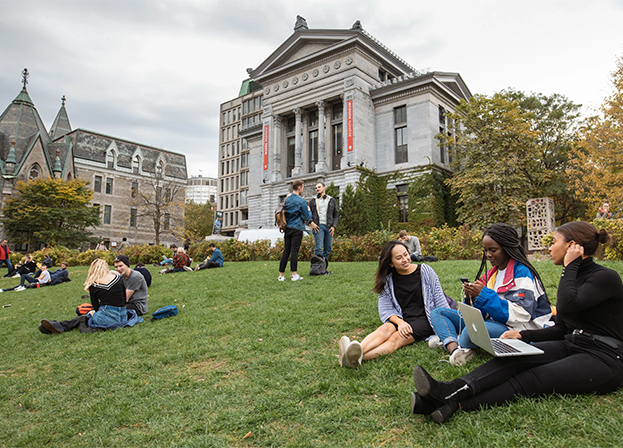
Canada ranks #4 on the list of best countries for world-class education. You can choose from more than 16,000 university programmes and 8,000 colleges.
Since the pandemic, Canada’s economy has evolved due to the federal government’s measures to support economic recovery. The country continues to reform its immigration system to address new pressures, including changes in the labour market. To ensure that temporary residents are adequately supported in Canada, the Honourable Marc Miller, Minister of Immigration, Refugees and Citizenship, announced additional measures. These measures aim to manage the influx of temporary resident arrivals while protecting vulnerable people and maintaining the integrity of the immigration system.
These measures include:
- Reducing the intake cap on international student study permits for 2025. This is based on a 10% reduction from the 2024 target of 485,000 new study permits issued. Thereafter, the intake cap will be stabilised for 2026 so that the number of study permits issued in 2025 remains the same going forward. In 2025, the number of study permits issued will be reduced to 437,000.
- Updating the Post-Graduation Work Permit Program in the autumn season to streamline immigration goals and labour market demands.
- Limiting work permit eligibility for spouses of students pursuing a master’s degree (minimum duration of 16 months).
- Limiting eligibility criteria for spouses of foreign workers in professional occupations, management, or sectors with labour shortages, as per Canada’s work permit programmes (TFWP and IMP).
Another significant requirement when applying for a study permit in Canada is obtaining a PAL (Provincial Attestation Letter) or TAL (Territorial Attestation Letter) from the province or territory where the student plans to study.
Documents to submit for a study permit:
- Letter of explanation (why you want to study in Canada and your understanding of student responsibilities)
- Medical examination (if studying for more than 6 months, recent travel history, or specific work requirements)
- Custodian declaration (for minor children)
- Proof of acceptance
- Provincial or territorial attestation letter
- Proof of identity
- Proof of financial support
You may also be asked to provide:
- A letter of explanation
- A medical examination
- A custodian declaration (minors only)
- Proof of immigration status depending on your country of origin
A re-entry permit is to be acquired before applying for a Canadian visa.
Life in Canada

From Where the World Looks Amazing
Canada is an immensely large country known for its friendly people, beautiful landscapes, and varied climate. Many international students choose to study in Canada as it is one of the most peaceful countries, with a low crime rate.
From skiing in Whistler to visiting Niagara Falls, sightseeing in Prince Edward Island, and exploring Banff National Park, there is plenty to see and experience.
International students have the freedom to celebrate festivals, enjoy camping, attend concerts, and much more.
Canada prides itself on the quality of life offered to its residents. You can enjoy green parks and gardens, commute within major cities, and experience various cultural attractions, such as museums, theatres, and art centres.
Academic opportunities that prepare you for global success are within reach. If you wish to apply for a student visa in Canada, connect with us and we will guide you towards a bright future.